Facturation électronique : ce qui change vraiment pour votre entreprise
Key Takeaways
France’s electronic invoicing reform changes how businesses issue, receive, route, and report transaction data. The practical work begins with understanding the calendar, checking software, and preparing teams for new controls.
- All VAT-liable businesses must be able to receive electronic invoices from September 2026.
- Issuing deadlines depend on company size, with smaller businesses generally moving in September 2027.
- An electronic invoice is structured data, not simply a PDF sent by email.
- Approved platforms will route invoices and transmit certain transaction and payment data.
- Early testing of workflows, data quality, and rejection handling can reduce disruption.
Understanding the facturation électronique obligatoire in France
The facturation électronique obligatoire reform is not just a change in document format. It changes the way commercial invoice data moves between businesses and the tax administration. For many companies, the visible invoice is only one part of a wider exchange involving structured information, routing, and status updates.
What the reform is designed to achieve
The reform is intended to modernize invoicing and make VAT information easier to transmit and use. It also supports the fight against VAT fraud, the simplification of future reporting processes, and a clearer view of business activity. Over time, standardized data should reduce some manual handling, although the transition itself requires careful preparation.
The change also gives businesses a reason to examine processes that have grown informally over the years. An invoice may pass through sales software, an accounting system, an external accountant, and a payment workflow before it is considered complete. The real change is operational, not merely visual.
Which businesses and transactions are covered
The reform primarily concerns businesses subject to VAT and their business-to-business transactions in scope of the French system. Company size affects the date by which an organization must issue electronic invoices, while the ability to receive them arrives earlier. Specific situations, including certain exempt operations or cross-border transactions, can require separate analysis rather than a one-size-fits-all answer.
Businesses should therefore start with their customer and supplier populations. A company selling to other businesses, consumers, and overseas customers may have several obligations at once. The business coverage guidance can help frame the questions around company size, VAT status, and possible exemptions.
The difference between electronic invoicing and PDF invoices
A PDF can be digital without being an electronic invoice under the reform. A compliant electronic invoice contains structured data that can be processed by systems, transmitted through the required channel, and connected to the relevant transaction. Sending a PDF as an email attachment usually does not provide that machine-readable structure on its own.
This distinction matters because a business can be paperless and still not be ready. Scanning paper invoices, exporting PDFs, or emailing attachments may improve convenience, but those actions do not automatically create the required flow of structured information.
Why the rules affect more than your accounting department
Accounting will handle much of the compliance work, but the source data is often created elsewhere. Sales teams determine customer details, purchasing teams maintain supplier records, and operations may know the delivery location or transaction status. If those inputs are incomplete, the accounting team cannot repair every issue at the final step.
The reform is therefore a cross-functional project. It touches master data, order-to-cash processes, procure-to-pay processes, software configuration, and employee habits. Treating it as an accounting-only upgrade can leave important gaps hidden until an invoice is rejected.
The timeline and deadlines your business must prepare for
The timetable is staged, but the first major date is already close for companies preparing during 2026. From September 2026, businesses must be able to receive electronic invoices, while the obligation to issue them depends on the applicable company category. The transition should be managed as a working implementation plan rather than as a date written on a calendar.

Receiving electronic invoices from September 2026
From September 2026, all businesses within the relevant VAT scope must be able to receive electronic invoices. This means selecting a compliant route for receipt, identifying the correct legal entities, and ensuring that incoming documents reach the people or systems responsible for processing them.
Receiving is not passive. The company needs to monitor whether an invoice arrived, whether it was accepted or rejected, and whether its data entered the accounting workflow correctly. A mailbox that stores attachments is not enough if the required structured exchange and status management are missing.
Issuing electronic invoices from September 2026
The first issuing deadline applies from September 2026 to the largest businesses and certain larger organizations covered by the timetable. These companies must produce electronic invoices through the applicable channel and transmit the required information in the expected form.
The work is broader than switching on an output setting. It includes customer identification, invoice formats, routing rules, credit notes, and exception handling. Companies with complex group structures should also confirm which legal entity issues each invoice and how its platform account is configured.
The September 2027 deadline for small and medium-sized businesses
Small and medium-sized businesses generally have until September 2027 to issue electronic invoices under the staged timetable. That later deadline is useful, but it should not be treated as permission to wait. Receiving begins earlier, and the systems chosen for reception may influence the eventual issuing workflow.
A simple planning table helps distinguish the immediate obligation from the later one:
| Milestone | Main requirement | Practical preparation |
|---|---|---|
| September 2026 | Ability to receive electronic invoices | Select a platform and test inbound routing |
| September 2026 | Issuing for larger businesses in scope | Configure formats, identifiers, and statuses |
| September 2027 | Issuing for smaller and medium-sized businesses | Complete rollout and train invoice owners |
| Before each deadline | Operational readiness | Test exceptions, controls, and support procedures |
The table is a planning aid, not a substitute for checking the legal category of each entity. A group may contain companies that do not share the same deadline, so the implementation register should record the timetable entity by entity.
What happens if your company misses the transition milestones
Missing a milestone can create more than a formal compliance concern. Suppliers may send invoices through a route the company cannot process, customers may reject invoices that are not issued in the expected form, and staff may resort to manual workarounds. Those workarounds make tracking and audit evidence harder to maintain.
The safest response is to identify dependencies early and escalate unresolved decisions. The reform timetable guide offers a useful background reference, but each business still needs to validate its own size category, transaction mix, and systems readiness.
The new role of approved platforms and public systems
The new system separates the document from the channel used to exchange it. Approved platforms act as intermediaries for sending and receiving electronic invoices and for transmitting certain data to the administration. Public systems and official guidance remain important reference points, but a business must understand what its chosen service actually handles.
How a partner dematerialization platform works
An approved platform can receive an invoice from a supplier, transmit it to the customer, and convert it into a format suited to the recipient where necessary. It can also extract specified invoice information for the tax administration and transmit transaction or payment data covered by the rules.
That intermediary role makes platform selection a process question, not just a software question. The company should ask how identities are managed, how rejected documents are reported, and how statuses return to the accounting or billing system. The official platform information explains the broad role of approved platforms and the transmission circuit.
What the public invoicing portal does and does not provide
The public system provides an important part of the national framework and official information about the reform. It should not automatically be assumed to replace every internal billing, purchasing, accounting, or document-retention process. Businesses remain responsible for making their own workflows accurate and usable.
A company should distinguish between a public service, a platform intermediary, and its internal applications. That distinction helps prevent a common planning error: assuming that registration or access alone will configure customer data, create invoice content, or reconcile payments.
How invoices will be routed between businesses
Routing depends on the identities and addresses used by the parties, as well as the selected platform arrangements. The sending side creates the invoice, the intermediary transmits it, and the receiving side accepts, rejects, or processes it according to its workflow. Some data is also transmitted separately to the administration.
This means routing errors can occur even when the invoice itself looks correct. A wrong identifier, inactive destination, or incomplete customer record may prevent delivery or send the document to the wrong internal queue. Clear ownership for correcting routing data is essential.
Choosing a platform that fits your size and transaction volume
The right choice depends on the number of invoices, the complexity of the legal structure, existing software, and the amount of automation the business needs. A small company may prioritize a simple interface and predictable support, while a larger organization may need multiple entities, integrations, and detailed status reporting.
Evaluation should include ordinary invoices as well as credit notes, advances, recurring billing, and rejected documents. It should also cover how data can be exported, retained, and reviewed if the company changes systems later.
What must appear in a compliant electronic invoice
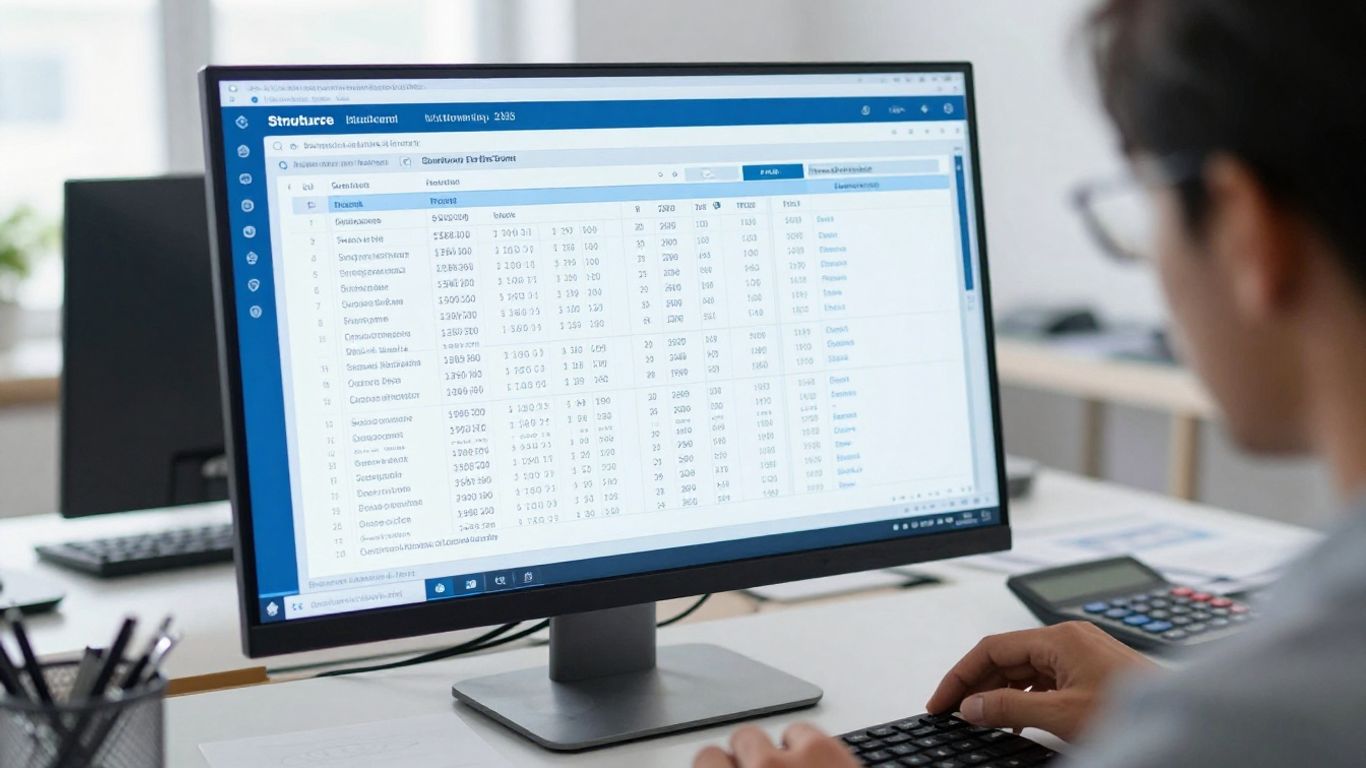
Compliance depends on the information carried by the invoice and the way it is transmitted. The reform introduces a structured data foundation alongside additional information requirements that businesses must capture consistently. The invoice should be treated as a data object connected to an order, customer record, payment, and accounting entry.
The required invoice data and structured formats
A compliant invoice needs the required identification, transaction, amount, tax, and payment information in an accepted structured format. The exact implementation may vary according to the route used, but the underlying data must remain complete, readable, authentic, and intact through transmission.
Businesses should not wait until the platform rejects an invoice to discover missing fields. A field inventory, mapped against the billing and accounting systems, can show which data is already available and which values must be added or cleaned.
New mandatory information such as the customer’s delivery address
The customer’s delivery address is one example of information that may need greater attention in operational systems. It can be different from the billing address, especially when goods or services are delivered to another site. If the source application does not distinguish those values, the invoice process may need a data model or workflow adjustment.
The same principle applies to other new or expanded fields. The business should identify where each value originates, who can change it, and how changes are approved. A field that is technically present but routinely blank is not a reliable control.
How invoice status tracking supports compliance
Status tracking shows what happened after an invoice was created. Depending on the process, relevant states may include transmission, receipt, acceptance, rejection, and later processing. These statuses help teams identify exceptions instead of assuming that a generated document was successfully delivered.
Status data also supports reconciliation. Finance teams can compare issued invoices with received acknowledgments, accounting entries, and payments. That creates a clearer audit trail and makes it easier to distinguish a timing issue from a rejected or misrouted invoice.
Handling credit notes, advances, and recurring invoices
Special invoice types deserve their own tests because they often follow different business rules. Credit notes must connect clearly to the original transaction, advances need to be reflected accurately, and recurring invoices must carry current customer and service information rather than relying on stale templates.
The objective is not to create separate manual procedures for every exception. It is to ensure the platform and internal systems can identify the relationship between documents, preserve the required data, and return a useful status when something fails.
Why e-reporting is a separate obligation
Electronic invoicing and e-reporting are related, but they are not the same activity. Electronic invoicing concerns the exchange of invoices through the required channel, while e-reporting concerns the transmission of information about certain transactions or payments to the administration. A company can therefore have reporting duties even where no business-to-business electronic invoice is exchanged.
Which business-to-consumer transactions require reporting
Business-to-consumer sales generally do not follow the same invoice exchange route as domestic business-to-business transactions. Instead, relevant transaction data may need to be reported according to the applicable rules and frequency. Retail, service, and mixed sales models should be reviewed separately because the source data and reporting process may differ.
The practical question is where the transaction data is created and how it can be extracted accurately. Point-of-sale systems, ecommerce platforms, and billing tools may all hold pieces of the information required for reporting.
How international transactions are reported
International transactions can also fall into a reporting process rather than the domestic electronic invoice exchange. The treatment depends on the transaction, the customer or supplier location, and the applicable VAT context. Companies should map these flows instead of assuming that every foreign invoice is handled like a domestic one.
A transaction map can reveal that the same sales application produces domestic B2B invoices, consumer receipts, and export documents. Each flow may need a different destination, data set, or review step.
The difference between invoice transmission and payment data
Sending invoice data does not automatically mean that payment data has been transmitted. Payment information may be required for relevant operations and can follow its own timing and control requirements. The accounting team should know which system is the source of truth for payment status and how that information reaches the reporting process.
This distinction is especially useful when a business receives payment through several channels. Without clear ownership, a company may report invoice details correctly but provide incomplete or delayed payment information.
How e-reporting affects companies with mixed customer bases
A company serving businesses, consumers, and international customers may need several coordinated processes. The sales channel determines the original data, the customer category affects the reporting route, and the payment method may determine when additional information becomes available.
The solution is a transaction classification model that is simple enough for staff to use and precise enough for systems to apply. It should be tested against ordinary sales, refunds, deposits, and unusual customer cases before the reporting deadline.
The operational changes across your business
The reform becomes tangible when existing tools and habits are examined together. Billing, purchasing, customer records, tax data, and payment systems may have been designed for different purposes and maintained by different teams. Readiness depends on how well those parts communicate.
Updating accounting and billing software
Accounting and billing software must be able to create, receive, or process the required structured data through the chosen route. This may involve a version update, a connector, new fields, or a change to invoice templates and numbering. The business should confirm both functional compatibility and the vendor’s support arrangements.
Do not limit the review to the standard invoice. Credit notes, recurring invoices, advances, cancellations, and multi-entity billing often reveal limitations that a basic test will miss.
Connecting sales, purchasing, and payment workflows
The invoice is created upstream of accounting and completed downstream through payment and reconciliation. Sales needs reliable customer details, purchasing needs supplier information, and finance needs statuses and payment data. Connecting these workflows reduces manual re-entry and makes responsibility clearer.
A practical sequence can help teams organize the work:
- Map where customer, supplier, tax, delivery, and payment data originates.
- Identify every handoff between sales, purchasing, billing, accounting, and external advisers.
- Assign an owner to each data field and exception type.
- Test the normal path and at least one rejected or corrected transaction.
This sequence turns a broad technology project into a set of manageable questions. It also makes it easier to see whether a failure belongs to a system, a data owner, or a business rule.
Managing invoice data quality and duplicate records
Structured invoicing exposes inconsistent records that may have been hidden by manual review. Duplicate customers, outdated addresses, inconsistent VAT identifiers, and multiple supplier records can all affect routing or reporting. Data cleanup is therefore part of compliance preparation, not a separate cosmetic project.
Controls should prevent new duplicates as well as correct old ones. A defined master record, approval rules for changes, and periodic comparisons between systems can keep the problem from returning after the initial cleanup.
Training employees and coordinating external accountants
Employees need to understand what changes in their daily work: which fields they must complete, how to identify a rejected invoice, and where to send an exception. External accountants and advisers should be included early because they may receive data, review statuses, or support reporting obligations.
The professional guidance from the accounting order provides background material that can support internal explanations. Training is most effective when it uses the company’s own screens, customer examples, and escalation paths rather than abstract terminology alone.
How to build a practical implementation plan
A useful implementation plan starts with the current state and ends with evidence that the process works. It should name the legal entities involved, the relevant deadlines, the systems affected, and the people who will resolve exceptions. The plan can be modest, but it should be specific enough to guide decisions week by week.
Auditing your current invoicing processes
Begin by documenting how invoices are currently created, approved, sent, received, recorded, and paid. Include the variations: different business units, sales channels, customer types, currencies, and external service providers. Interviews with the people who handle exceptions often reveal more than a review of standard operating procedures.
The audit should produce a list of gaps rather than a generic statement that systems are old. For each gap, record the affected transaction type, the risk, the proposed owner, and the date by which a decision is needed.
Checking software compatibility and platform connectivity
Ask each software provider how the application supports structured invoice data, incoming documents, statuses, and e-reporting inputs that apply to the business. Confirm what is included in the current contract and what requires configuration or an additional connector. Then verify how the application will connect to the selected approved platform.
Compatibility should be tested with real, anonymized examples. A successful demonstration using a simple invoice does not prove that the whole environment can handle multiple entities, delivery addresses, credit notes, or rejected documents.
Testing data formats, routing, and rejection handling
Testing should follow the invoice through its complete journey. Create representative documents, transmit them, confirm receipt, inspect the returned status, and deliberately test an error such as a missing identifier or invalid field. The goal is to learn how the system behaves when the process is imperfect.
Record each result and assign a corrective action. A test is valuable only when the business knows who will fix the issue, how the fix will be verified, and what users should do if the same rejection appears after launch.
Setting up controls for security, retention, and audit readiness
Electronic records still require appropriate access, retention, and traceability controls. Decide who can create or amend customer data, who can approve an invoice, how documents and statuses are retained, and how changes are logged. Security should cover both the platform connection and internal user access.
Audit readiness is easier when evidence is produced during normal work. Keep configuration decisions, test results, exception logs, and training records together with the process documentation. That creates a credible record of how the business prepared and how it handles ongoing issues.
Conclusion
The facturation électronique obligatoire is best understood as a redesign of invoice information flows, not a simple move from paper to screens. Businesses that map their transaction types, choose an appropriate platform, clean their data, and test exceptions will be better placed to meet the timetable without turning every rejection into an emergency.
Frequently Asked Questions
What is the facturation électronique obligatoire?
It is the French requirement for businesses in scope to exchange certain invoices electronically through the required channels and provide specified transaction or payment data to the administration.
Does emailing a PDF count as electronic invoicing?
Usually not. A PDF may be digital, but the reform requires structured invoice data that can be processed and transmitted through the appropriate system.
When must businesses be able to receive electronic invoices?
Businesses in scope must be able to receive electronic invoices from September 2026, subject to the rules applicable to their situation.
When must smaller businesses issue electronic invoices?
The staged timetable generally gives small and medium-sized businesses until September 2027 to issue electronic invoices, although each entity should confirm its category and obligations.
What is e-reporting?
E-reporting is the transmission of specified transaction or payment information for operations that are not handled through the same business-to-business electronic invoice exchange.
What should a company test first?
It should test customer and supplier identifiers, structured data, routing, invoice statuses, credit notes, payment information, and the handling of rejected or corrected documents.
Who should be involved in implementation?
Accounting, sales, purchasing, operations, IT, payment teams, management, and external accountants may all hold information or perform steps needed for a complete and reliable process.
